It's not laziness.
It's executive function.
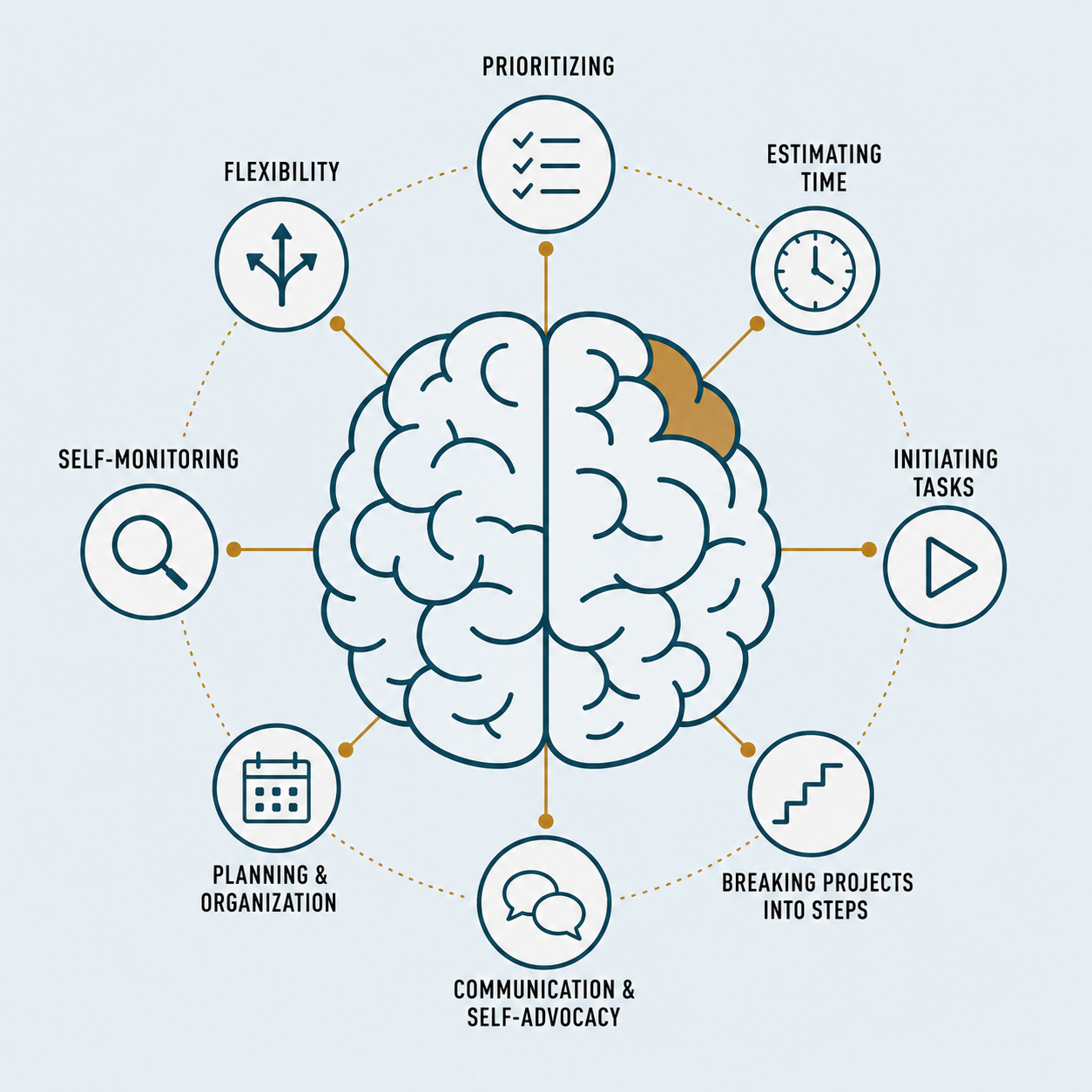
The missing assignments, the last-minute projects, the "I don't have homework" — those are planning skills nobody taught yet. The Middle School Master Plan teaches them, week by week, on your child's real work.
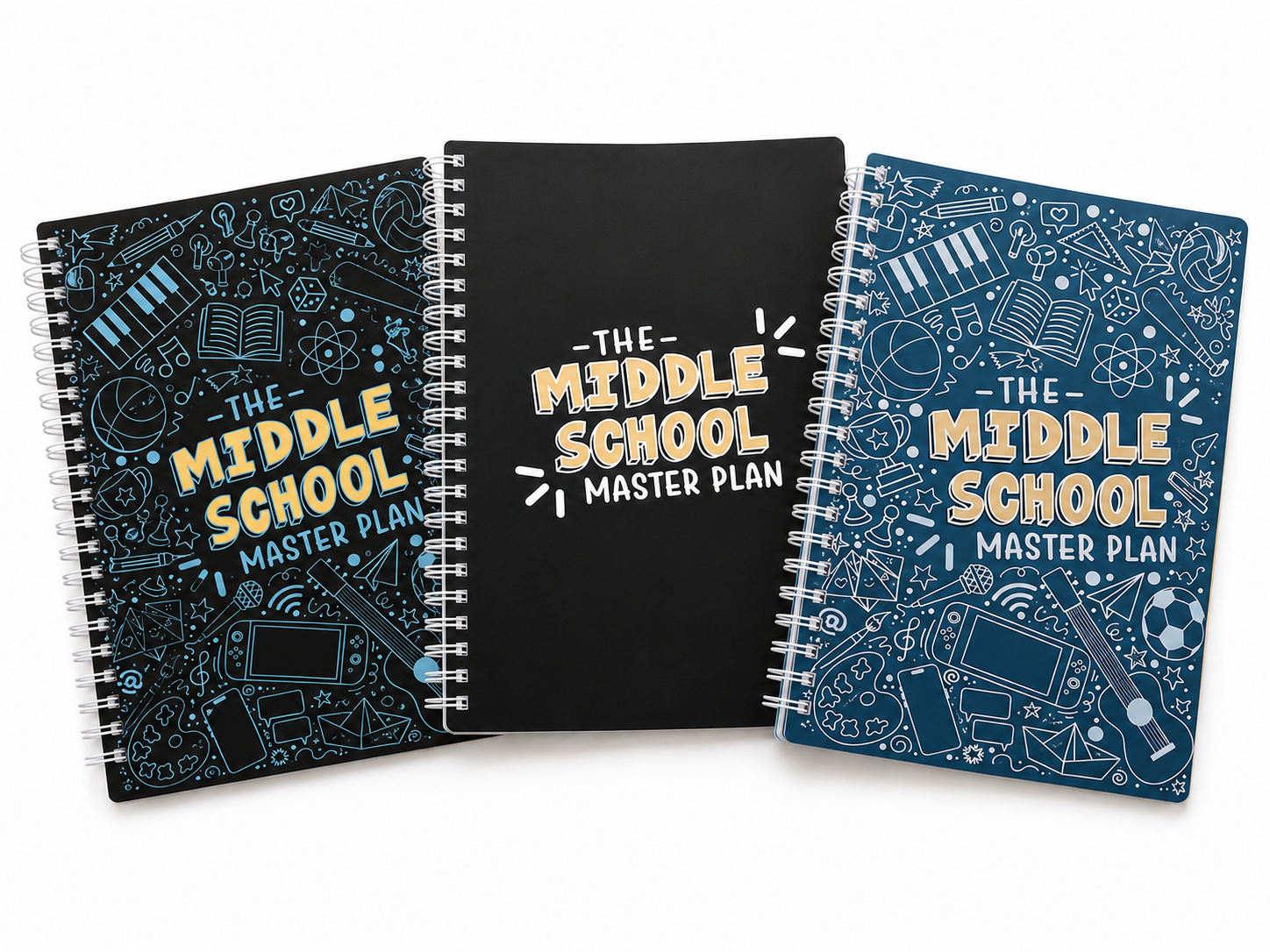
Three cover designs. Same full-year system inside.
Sound familiar?
If you've said any of these out loud this year, you're not looking at a motivation problem. You're looking at four or five specific, teachable skills.
“He did the whole assignment and never turned it in.”
TASK COMPLETION“The project was assigned three weeks ago. She started last night.”
TASK INITIATION“It'll take five minutes.” It took two hours.
TIME ESTIMATION“I emailed the teacher for him. Again.”
SELF-ADVOCACYNone of these are attitude problems. They are the same handful of skills, showing up in four different disguises.
Executive function is the brain's project manager.
It's the set of skills that lets a student hold a deadline in mind, break a big thing into steps, start before they feel like it, and ask for what they need. In middle school the workload triples and the adult scaffolding disappears — right as these skills are still under construction.
A planner assumes a student already has these skills. This system teaches them.
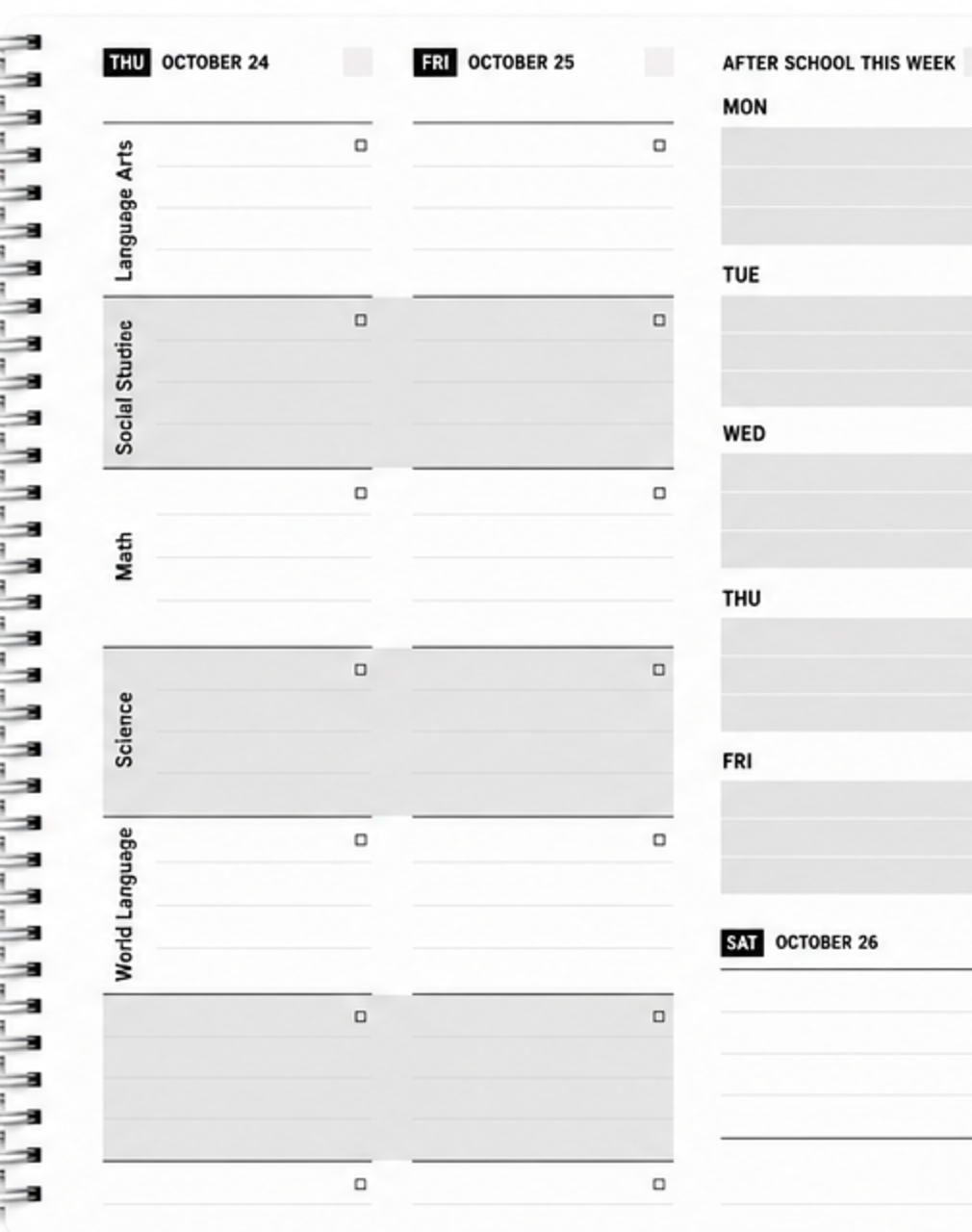
Both are planners.
Only one teaches how to plan.
The school-issued planner is empty boxes. Every element on our page is doing a job: reducing forgotten materials, handling A/B days, and teaching one skill a week on the work that's already due.
A planner is stationery.
This is instruction.
The same three moves, every week, all year.
Skills get rehearsed on the student's own assignments, schedules and deadlines — not on made-up worksheet scenarios. That repetition is what turns a strategy into a habit.
Plan the real week
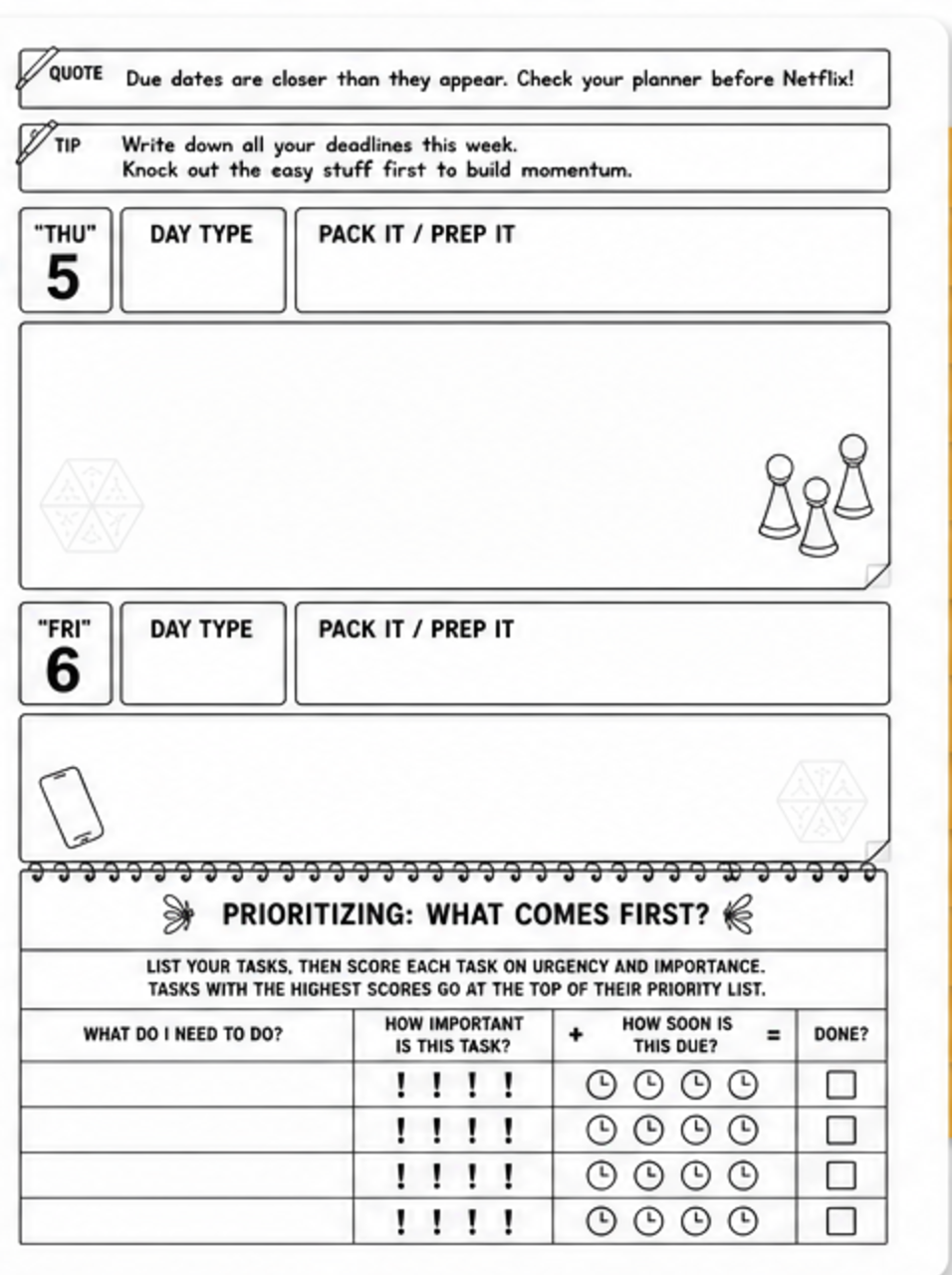
A/B day fields, Pack It / Prep It, daily writing areas and a mindset cue. The frame never changes, so there is nothing new to figure out on a busy school night.
Practice one EF skill
A different executive-function activity every week — four or five across a month — always applied to work that's already on the calendar.
Revisit and strengthen
The rotation returns to each skill on new assignments, following plan → try → check → adjust. Meanwhile the rest of the planner keeps all eight skills in play all year.
Five skills rotate weekly. All eight are supported all year.
The weekly EF practice area cycles through five skills — one per week, four or five a month depending on the calendar. The other three are built into the spreads, the planning pages and the monthly structures, so nothing is taught once and dropped.
Need more reps on one skill? Every practice has a full printable practice page in the Hub — download it as many times as you want.
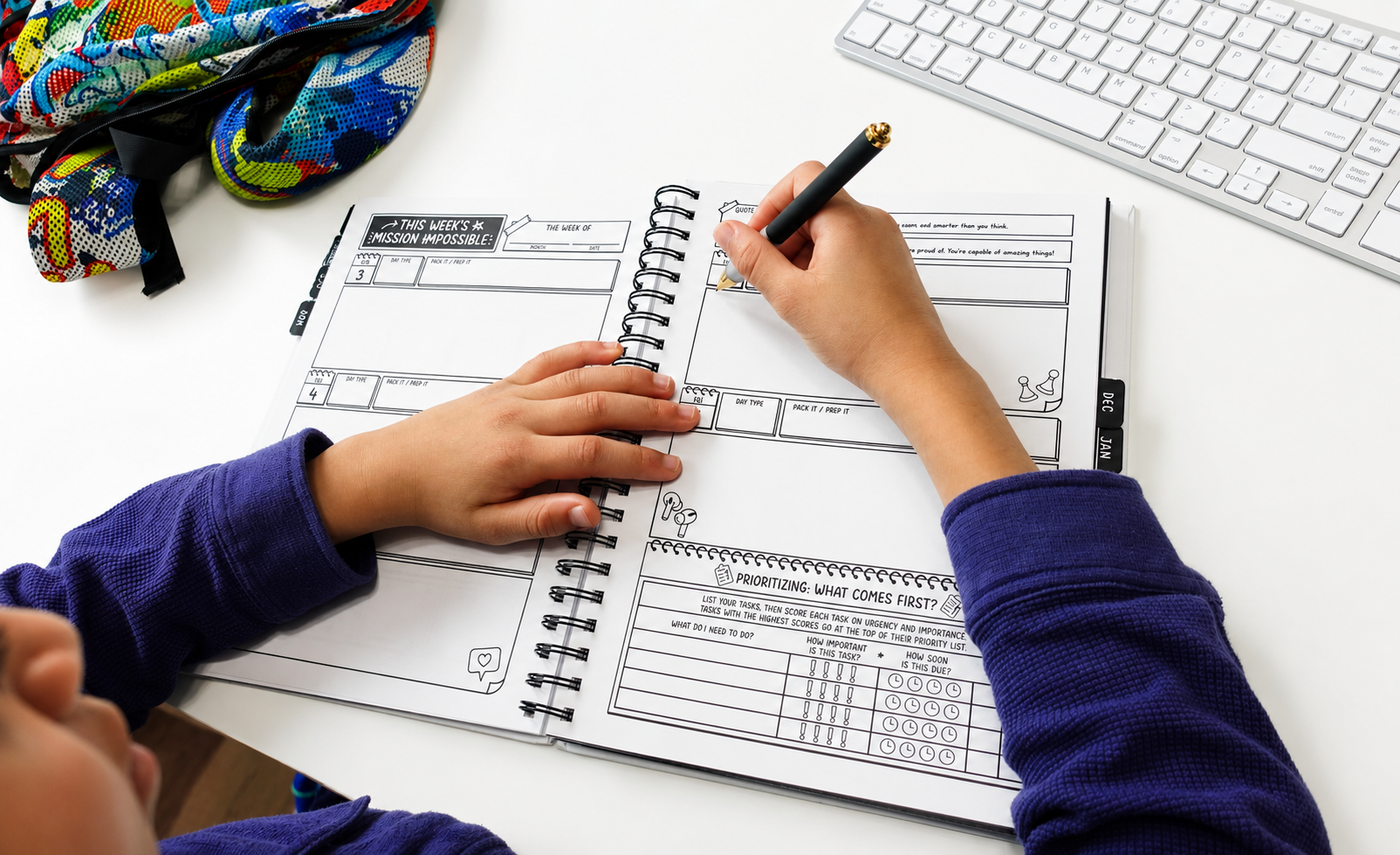
What's actually in the box
One 192-page planner, four kinds of built-in instruction, and a Hub that walks the student through it without you having to teach it.
The routine that repeats 40 times
The frame stays the same every week — day type, materials prep, daily capture, a mindset cue — and that predictability is the point. What changes is the executive-function activity at the bottom of the spread: a different skill each week, then the cycle repeats on new work.
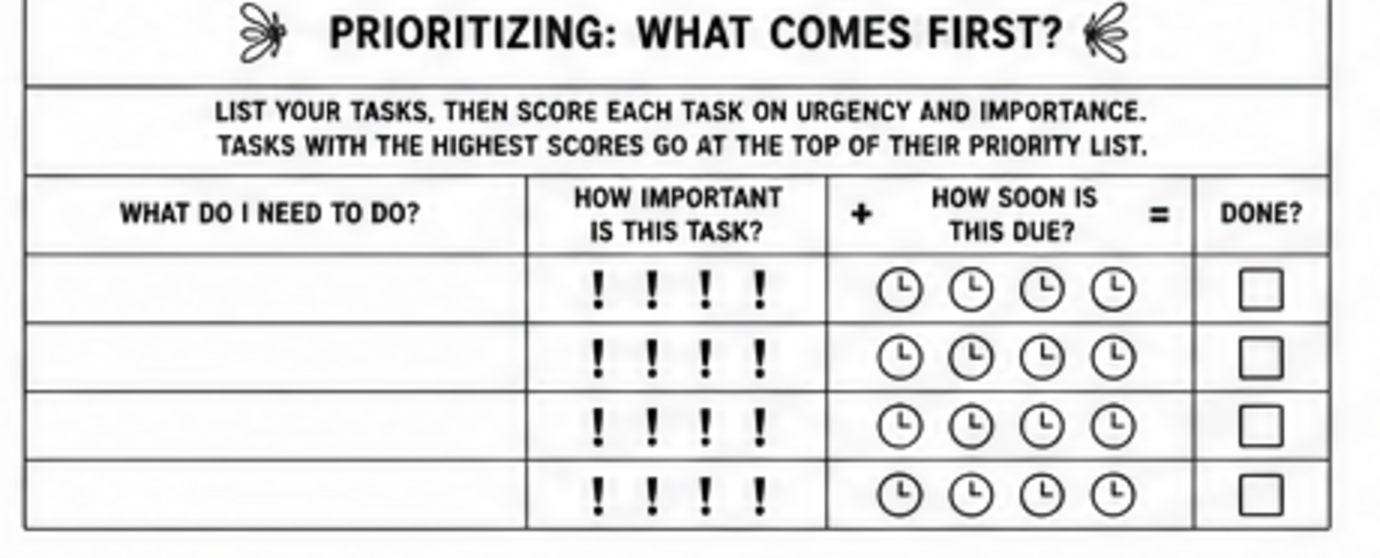
One week's activity, shown as an example: Prioritizing — students score their real tasks on importance and urgency, then work top-down. A different skill appears the following week.
They email the teacher. Not you.
Teachers are asking for more accountability from students — but most 11-to-14-year-olds have no idea how to raise an issue with an adult and actually get it resolved. So the template does the structure and the student fills in the blanks: subject line, greeting, what happened, what they're asking for, a respectful close. They write a message that works before they know why it works.
Three pages students turn to when the work gets big
Dedicated, reusable pages for the moments a weekly grid can't hold: a project that feels impossible to start, a week that fell apart, a goal with no obvious first step.
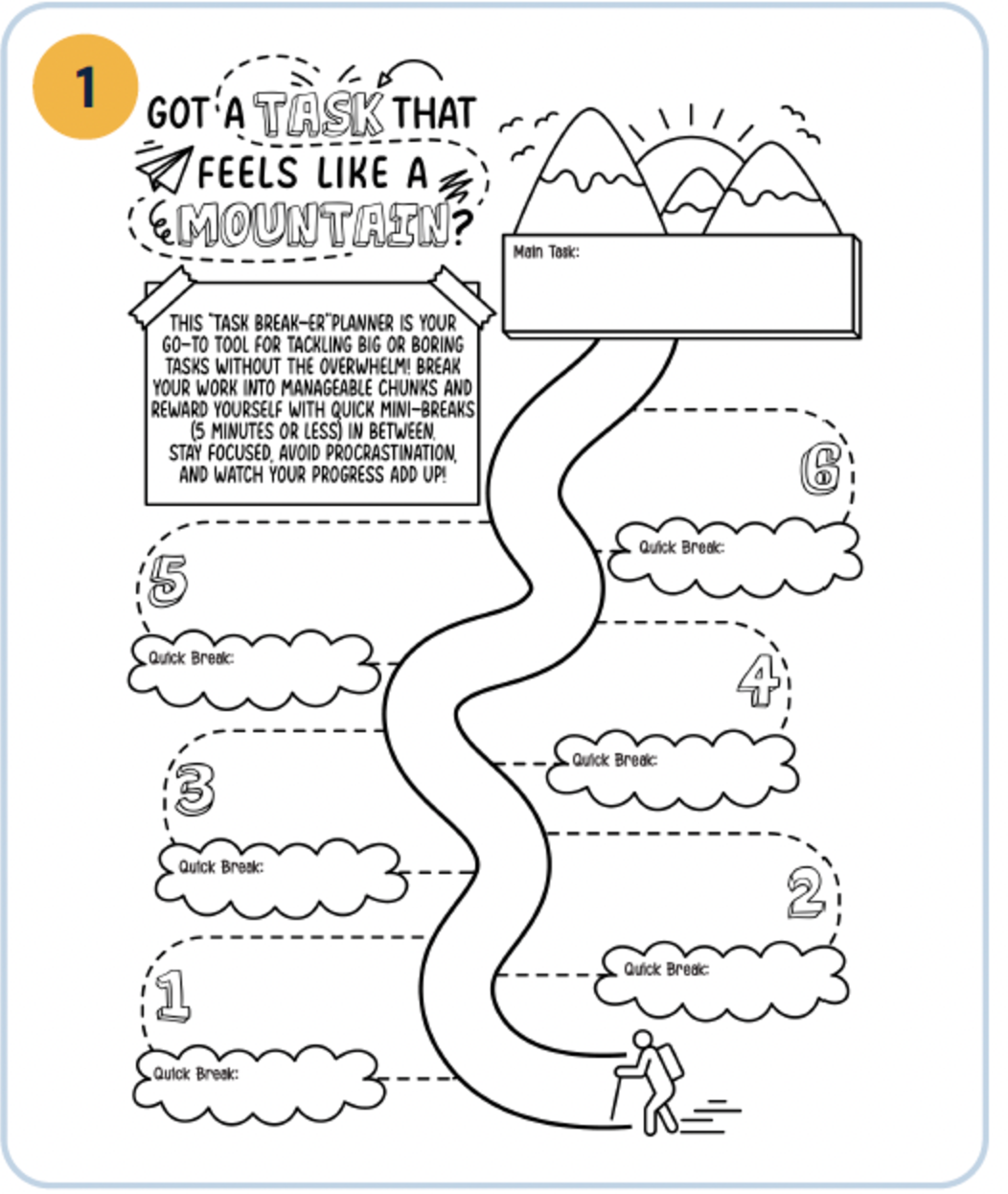 FOR: “I CAN'T EVEN START”
Task Break-er
Breaks a mountain of a task into small steps with mini-breaks along the way, so starting means doing one segment — not the whole thing. Printed in the student's own language: “helps you finish without feeling overwhelmed or procrastinating.”
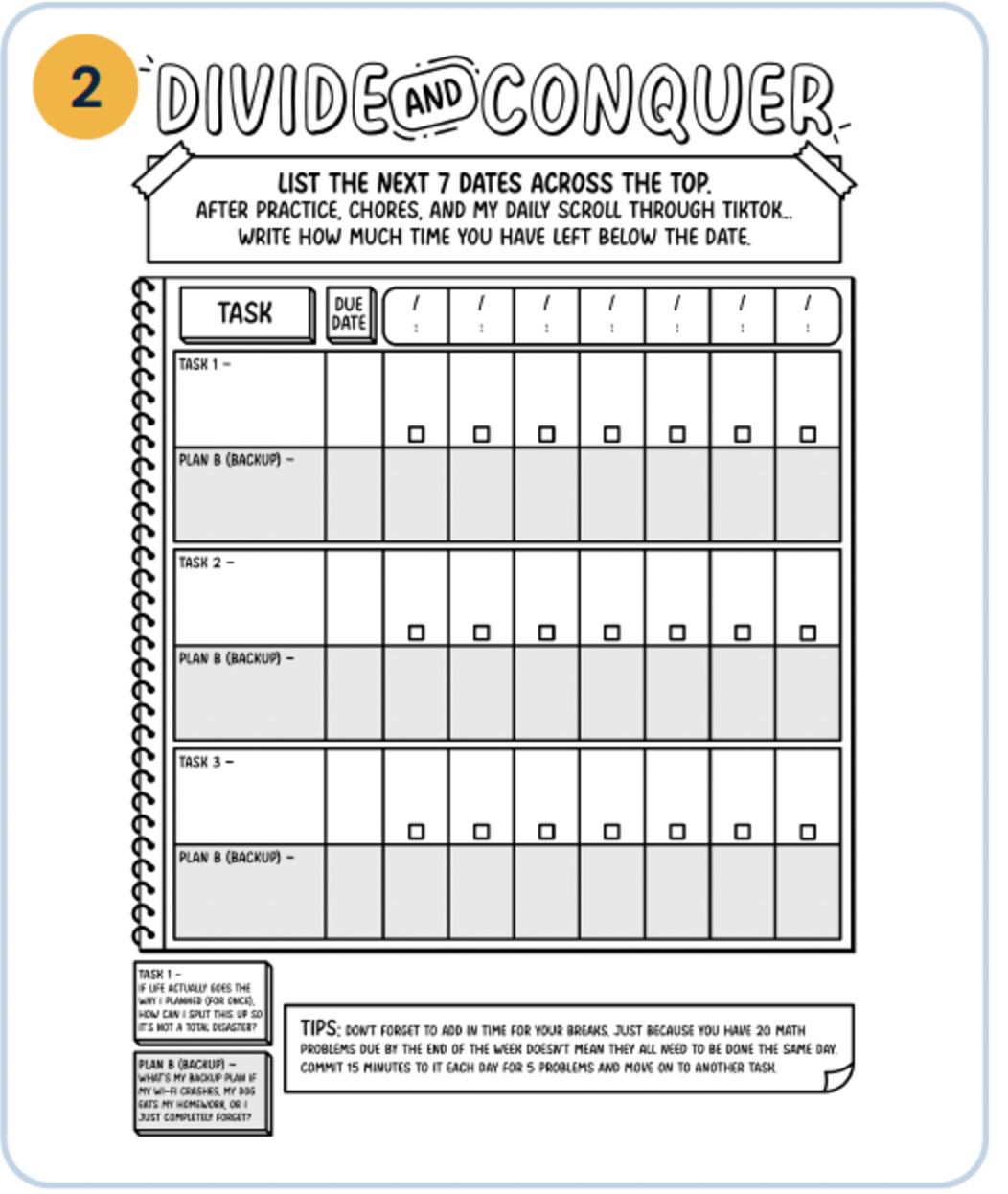 FOR: “EVERYTHING IS DUE AT ONCE”
Divide & Conquer
Every task, every due date and the next seven days in one view — then a Plan B row for when practice runs late or the week changes.
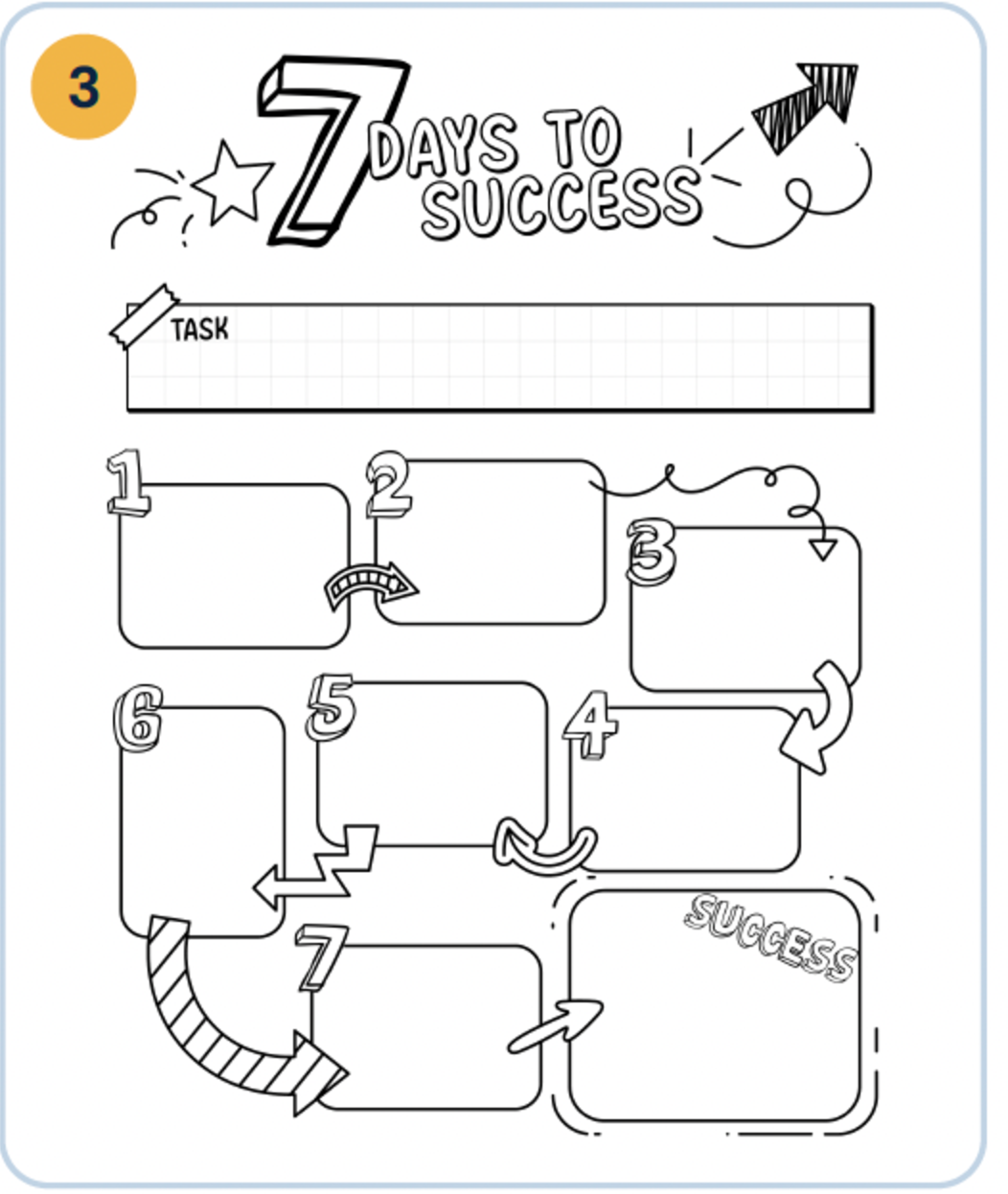 FOR: “I HAVE A GOAL, NOW WHAT”
7 Days to Success
Sequences one goal into seven ordered steps toward a finish line, so a vague intention becomes a schedule.
The planner teaches.
The Hub coaches.
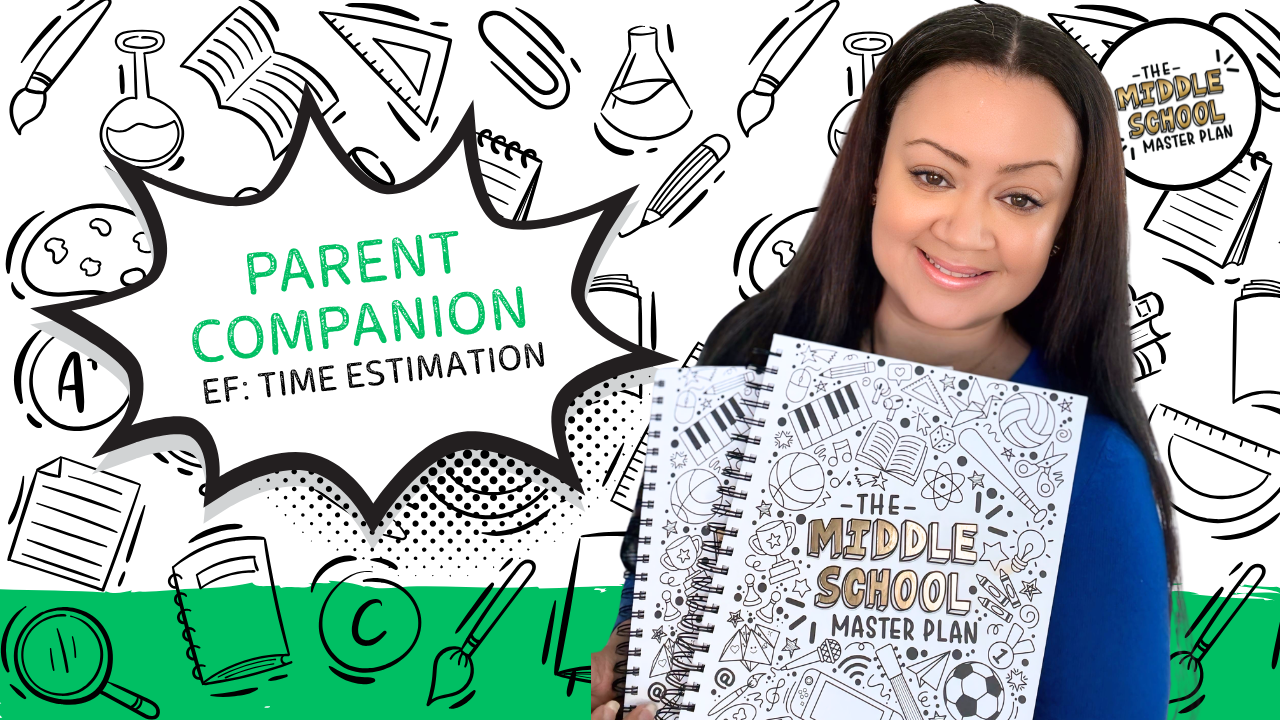
Page-by-page guided videos for the student, a full printable practice page for any skill they want more reps on, and a Parent Companion for every practice — including what improvement actually looks like. On time estimation, for example, you're not looking for accurate guesses. You're looking for the gap between predicted and actual getting smaller.
Access runs the whole school year and is included in the $34.97.
“It gave us a way to help without feeling like we were constantly reminding, correcting, and hovering.”
Parent of a 7th Grade Student“I absolutely love the Middle School Master Plan. I created a small group with this for students who struggle with procrastination, planning, or balancing school and extracurriculars.”
Middle School Counselor • Texas“The planner allowed students to organize assignments, school and home activities. I would highly recommend it for all students.”
Shaunne McKinley • Gifted Specialist, Phoenix, AZMy son's school counselor called and asked what planner we were using. She'd noticed how organized he was and wanted to recommend it to other families. It was the Middle School Master Plan, still in testing. That's how I knew it was working.
Jennifer Hill, PhD • FounderThe reviews that matter most are the kids'
A planner only works if a 12-year-old is willing to open it. Here's what 6th graders say it changed.
“It has helped me manage my time by showing me how to put my priorities first. If I'm finishing my homework faster than I thought, I always go back and check it now.”
6th Grade Student“My Middle School Master Planner helps me organize myself so I can turn in my work early and earn all the extra points.”
6th Grade Student“It helped me make a new routine for getting organized and develop a habit of writing important things down.”
6th Grade Student • Lancaster ISD
15+ years in education
Specialist in neurodiverse learners
I built this because I watched capable students get called lazy for a skills gap nobody had taught them how to close. My original research on twice-exceptional learners has been downloaded in 40 countries, and every structure in this planner is aligned to published research on time-management planning, homework routines, goal sequencing and self-regulated learning.
Designed for the adolescent brain, on research spanning 1,000+ middle schoolers and a 21-study meta-analysis.
A traditional planner assumes executive function a middle schooler is still developing. Three bodies of research shaped how this one is built — each one an association reported in independent studies, not an efficacy trial of this product.
Stronger academic time-management planning was associated with higher self-regulation for learning.
Maps to: Shapes the weekly spread: planning, prioritizing, and seeing tasks and time together.
Lourenço & Paiva, 2024 · International Journal of Changes in EducationHomework-management routines — environment, time, motivation, emotion, attention — were associated with greater homework completion.
Maps to: Shapes the repeating weekly routine and its visible management cues.
Avcı, Özgenel & Avcu, 2025 · Metacognition and LearningPlans that specify when, where and how to act support goal attainment.
Maps to: Shapes the Plan B rows in Divide & Conquer and the Flexibility activity.
Wang, Wang & Gai, 2021 · Frontiers in PsychologyThese sources informed the design of the system. They are studies of planning, homework routines and goal-setting in general — not independent efficacy studies of The Middle School Master Plan, and we do not present them as such. Testimonials reflect individual experiences and have been lightly shortened for space.
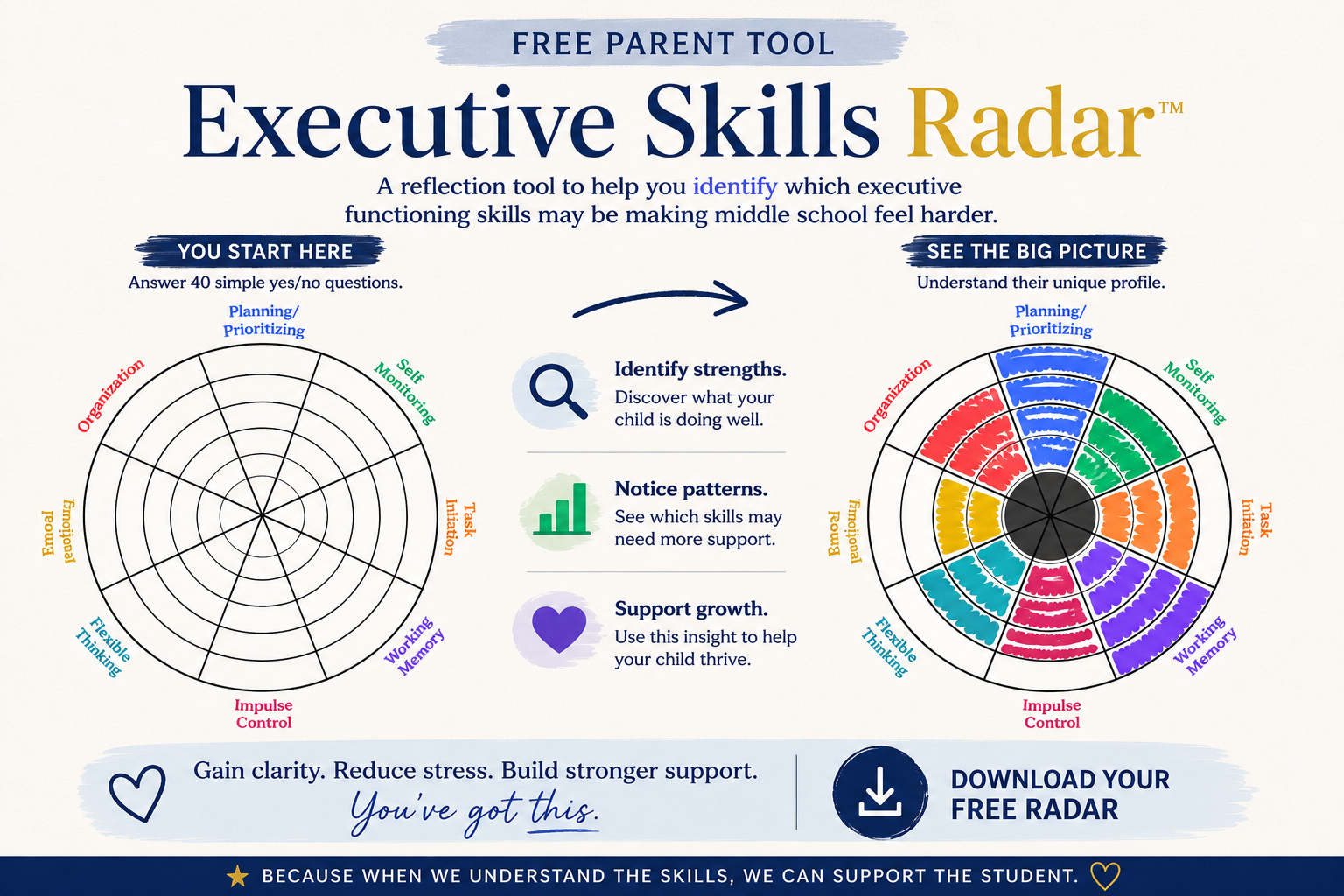
Not sure which skill is the problem? Find out in 10 minutes.
The Executive Skills Radar™ is 40 yes/no questions that map your child across eight executive-function skills — planning, task initiation, working memory, organization, flexible thinking and more — so you can see the actual pattern instead of guessing.
Download the free RadarA reflection tool for parents and educators, not a diagnostic assessment.
Built for one kid or a whole grade level
The same system works at the kitchen table, in a counselor's small group, and as a campus-wide adoption.
Stop being the reminder
Your child gets a structure to lean on instead of you. The Hub teaches them to use it, so the nightly negotiation ends.
A ready-made EF intervention
Concrete, documentable practice for students with 504s and IEPs whose goals name organization, task initiation or self-advocacy. Runs as a small group out of the box.
Advisory, ready to teach
A full-year scope and sequence for advisory or homeroom with no prep — and fewer missing assignments to chase down.
Buying 5 or more?
Email for bulk pricing, purchase orders, quotes for grant or Title funding, and shipping to a campus address. We'll reply with everything a district needs to approve it.
The Middle School Master Plan
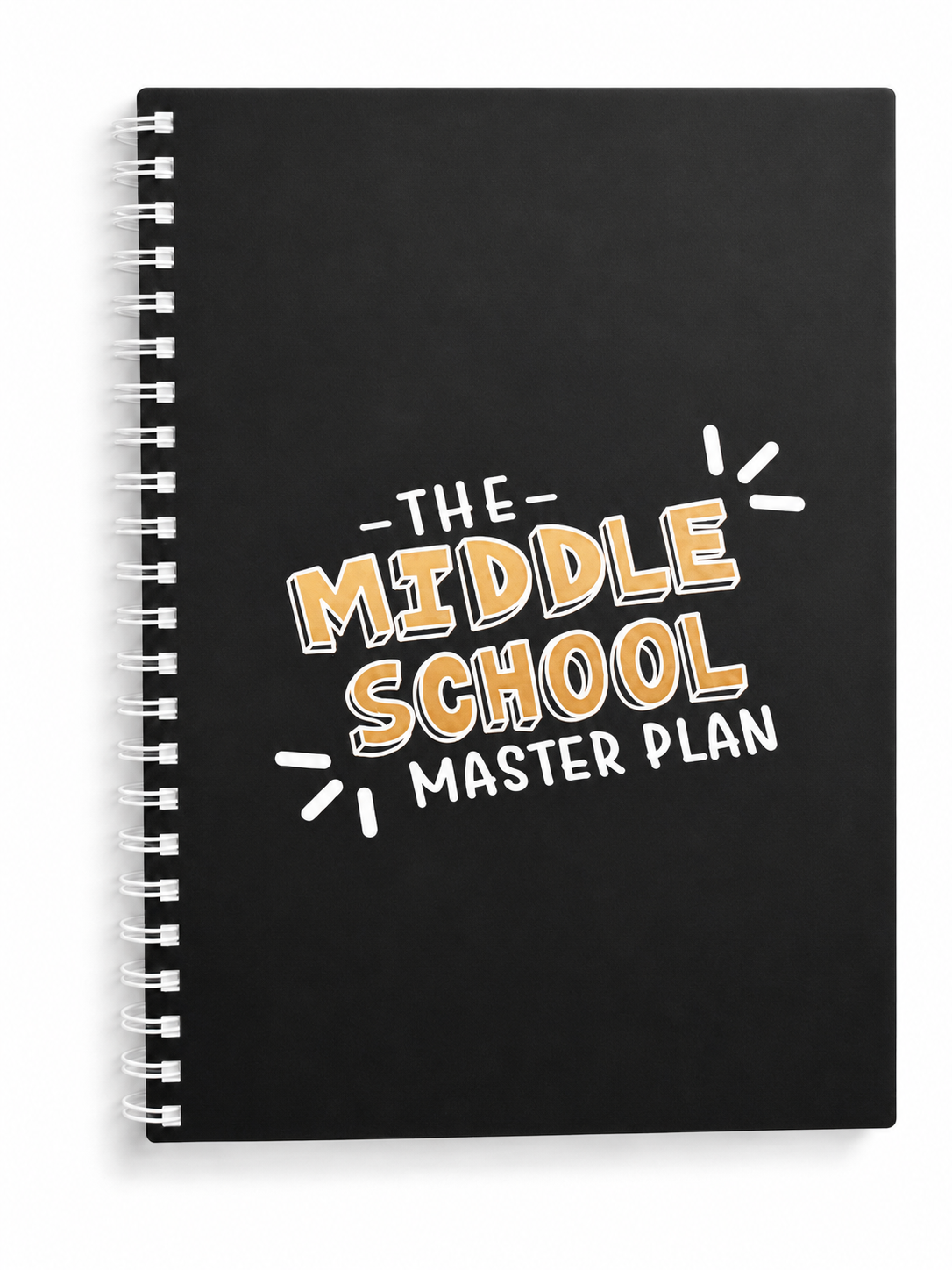
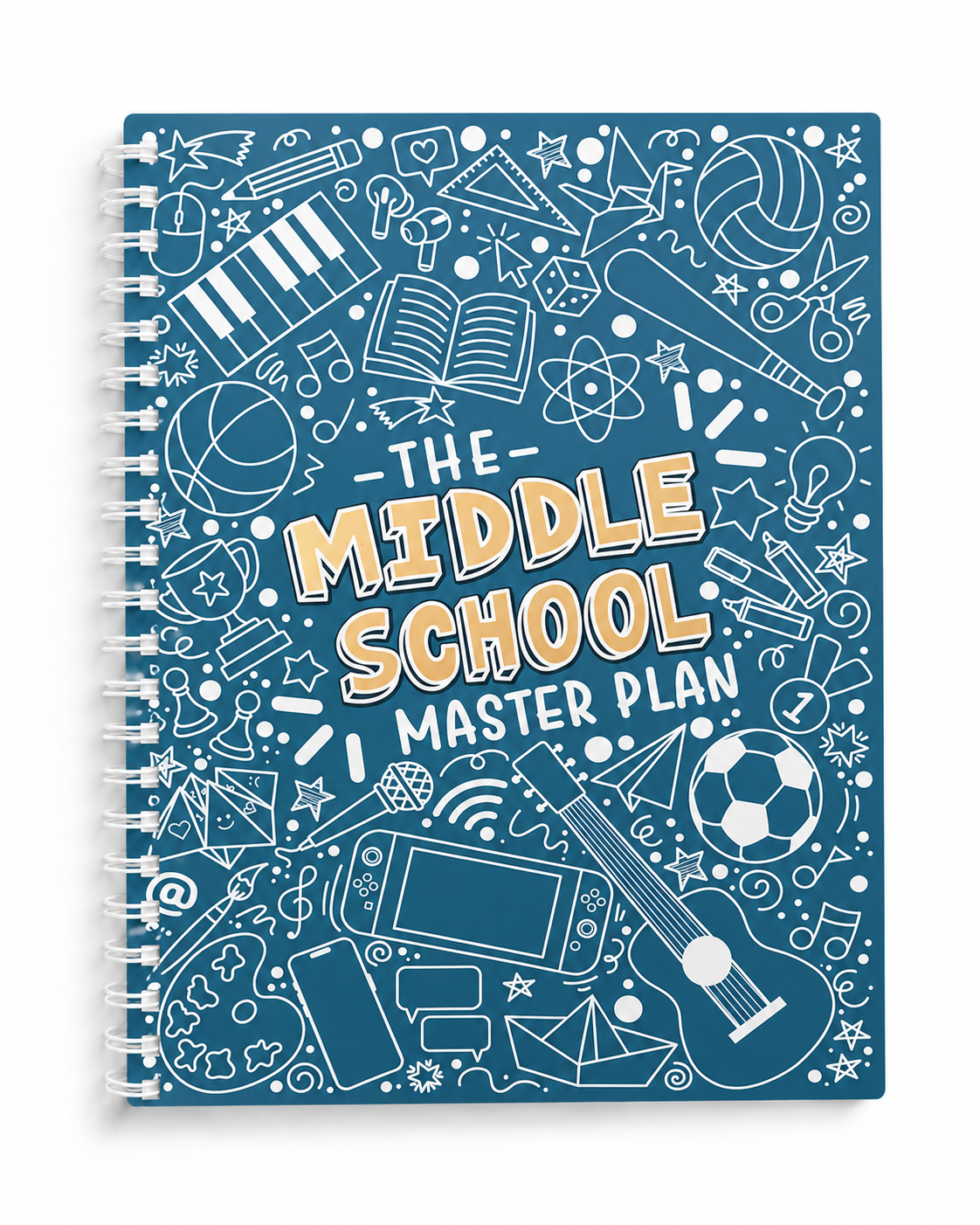
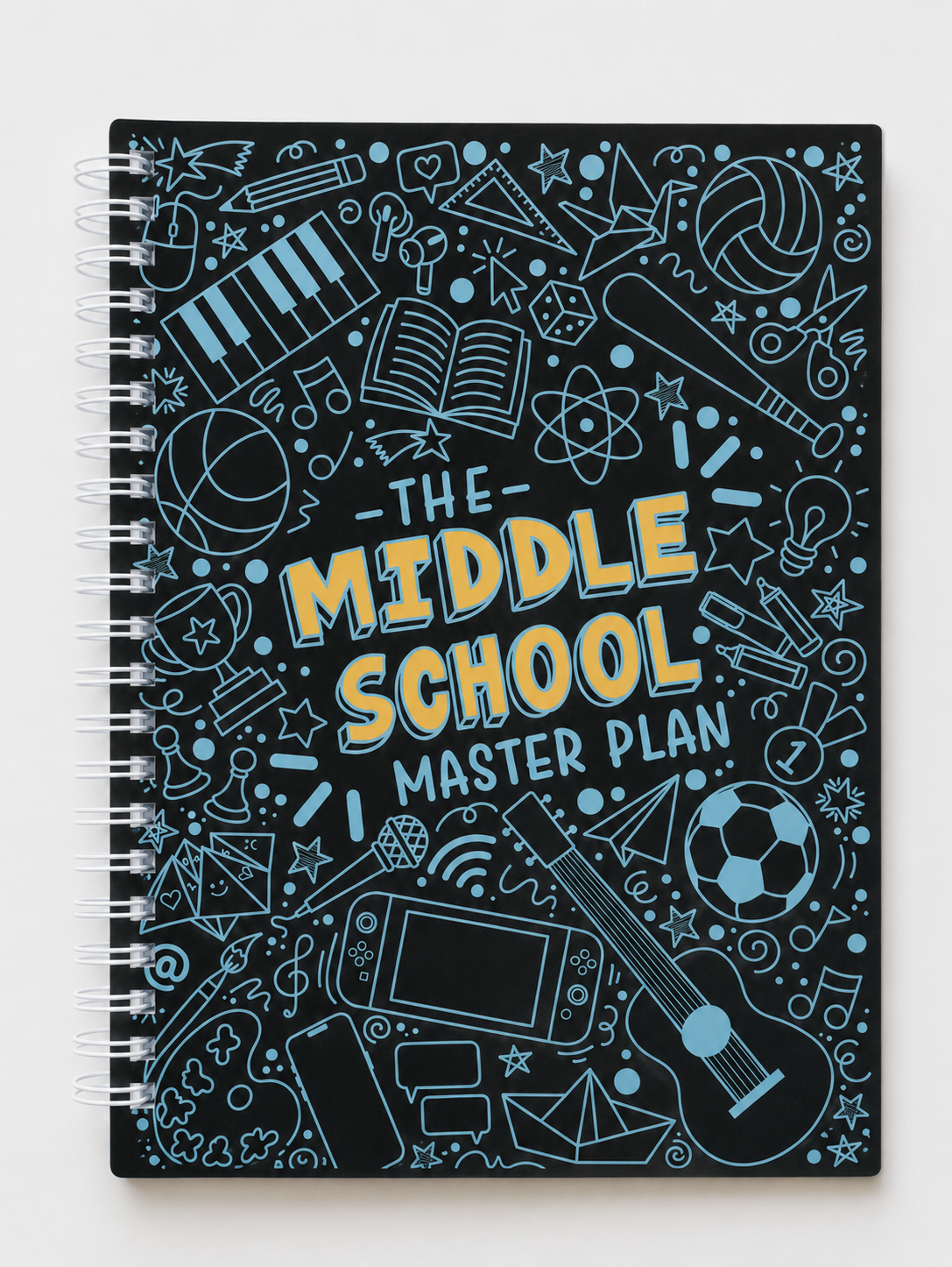
Pay It Forward editions available — buy one for a student who can't.
Straight answers
Isn't this just a planner?
No — and that difference is the whole product. A planner is blank space that assumes a student already knows how to plan. This teaches the skill on the same page where the work lives, then has them practice it again all year, with video instruction in the Hub.
We bought a planner last year and my kid never used it.
That's the expected outcome of handing a student a blank grid. Using a planner is itself an executive-function skill. Here, the Hub walks them through each page and the weekly routine never changes, so there's nothing new to decode when they're tired.
How much time does this take each day?
About 5–10 minutes a day, plus a slightly longer weekly look-ahead. It's built to fit around homework, practice and dinner — not to add a second assignment.
Will this help if my child has ADHD, anxiety or a learning difference?
It was built with those students in mind. It won't promise perfection — it gives them repeatable structures and shared language for the demands that overwhelm them, and it gives you a tool instead of another reminder. Imperfect use still counts: even filling in a few boxes a week is practice.
Does my child's school have to be involved?
No. It can work entirely at home — the instruction is on the page and the Hub videos speak straight to your child, so nothing depends on a teacher opting in. It is also structured so a counselor or advisory teacher can run it with a group, which is how many of our school buyers use it.
What grades is it for?
Built for grades 5–8. Plenty of families start a year early, in 4th or 5th, so the skills are already in place before the workload jumps.
How much am I going to have to teach?
Nothing. The instruction is built into the pages and the Hub videos speak directly to the student. A Parent Companion for each skill tells you what to reinforce and how to recognize progress when it starts.
Can I get a purchase order or a quote?
Yes. Email [email protected] and we'll send pricing, a formal quote and W-9 for school or district purchasing.
Handing a student a planner doesn't teach them how to plan.
Every year, schools and parents all over the country do it anyway.
Start the year with the system that does. 2026–27 covers are shipping now, in limited quantity.